
High Consequence, Low Probability Incident
A Framework for Integrated CBRNE Planning
Jennifer D. Osetek, PhD, MHS, CEM
Chuck Lineback, MS, NRP, NHDP-BC
Paul Biddle, CEM-ME
Victoria P. Simmons, MPS
Jason Kephart, MSC
Lamar González Medlock, MBA, CBRNE-WMD-C
George Washington University
Chemical, Biological, Radiological, Nuclear, and Explosive Credentials Program
May 2026
The George Washington University CBRNE-WMD Credentials Program provides specialized coursework for first responders, military personnel, emergency managers, public health professionals, and organizational leaders involved in CBRNE-WMD operations and policy implementation related to high-consequence, low-probability threats. This document presents findings from Operation Red Card, the program’s multi-day capstone exercise, which simulated chemical, biological, and radiological attacks across selected host cities for the 2026 FIFA World Cup. Through analysis of scenarios in Los Angeles, Kansas City, and New Jersey, the study examines how governance structures and infrastructure dependencies influence the effectiveness of emergency response efforts. The findings identify risks associated with emerging technologies, including autonomous vehicles and drones, as well as the potential effects of cyberattacks on physical safety systems. The analysis highlights the relevance of resilience-based governance and integrated threat assessment in addressing institutional challenges related to operational preparedness. The resulting framework provides an approach for evaluating and strengthening preparedness for large-scale international mass gatherings.
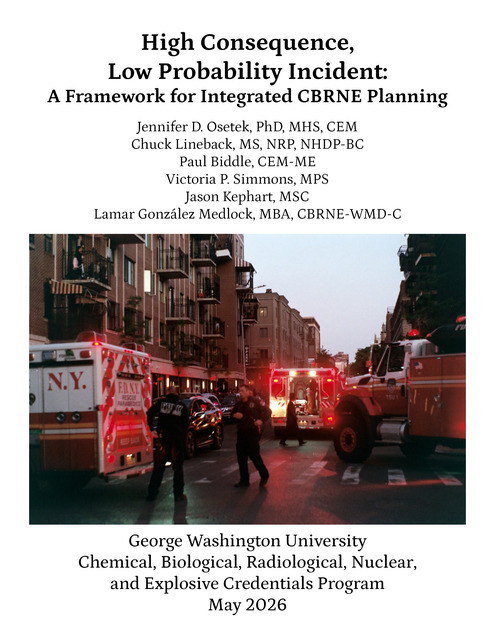
Image: Isaac N. on Unsplash
Table of Contents
Texts
Uncategorized
- This text has 0 annotations
- This text has 0 highlights
Metadata
- publisherGW University Press
- publisher placeWashington, DC